5 Signs Your Employees Are Vulnerable to Phishing Attacks

Why Phishing Still Works in 2024
Despite years of awareness campaigns, phishing remains the number one cause of enterprise data breaches. The reason is simple: attackers target humans, and humans make mistakes — especially when they're busy, stressed, or untrained.
The 5 Warning Signs
1. Employees Click First, Think Later
If your staff regularly click links in emails before checking the sender or hovering over the URL, your organisation is exposed. This impulse behaviour is the most exploited trait by attackers.
2. Nobody Questions Unusual Requests
A hallmark of Business Email Compromise (BEC) is an urgent wire transfer or credential request from a 'CEO'. If employees comply without verification, social engineering attacks will succeed.
3. Weak Password Hygiene
Reused passwords across personal and corporate accounts mean a single breach on any service can cascade into a full corporate compromise. Credential stuffing relies entirely on this behaviour.
4. Infrequent Security Training
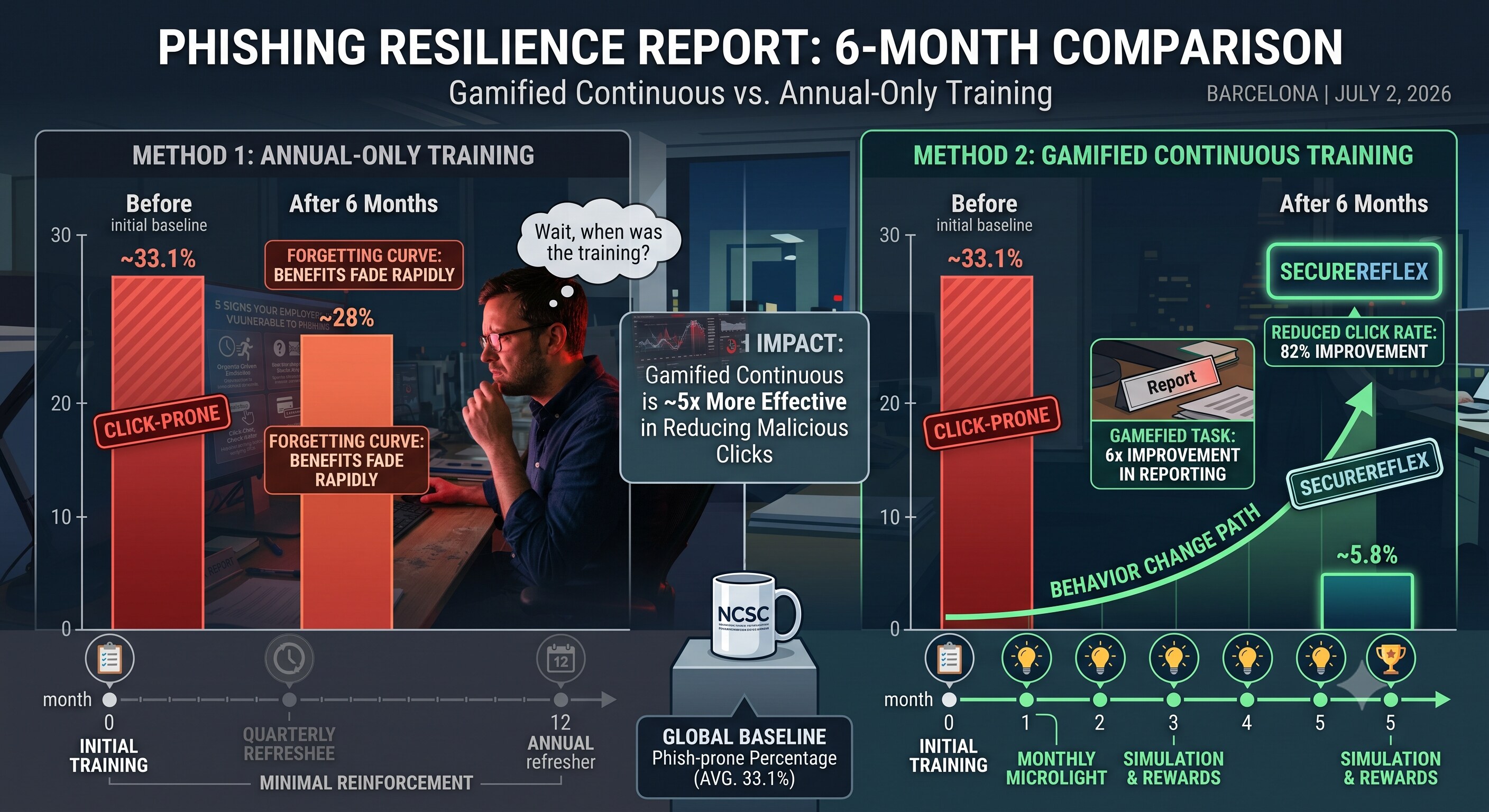
One-off annual training is not enough. Attackers evolve their lures monthly. Staff who haven't seen a simulated phishing test in over 90 days are measurably less vigilant.
5. No Culture of Reporting
If employees fear punishment for falling for a phishing test, they will hide real incidents. A healthy security culture celebrates reporting, even when someone almost fell for an attack.
What To Do About It
Gamified, continuous training — delivered in short bursts — has been shown to reduce phishing click rates by up to 76% in six months. Regular simulated phishing campaigns reinforce awareness without creating fear.
Want the full data? Download our State of Phishing in 2024 whitepaper below.